Imagine visiting one online shopping destination where different businesses, independent sellers, and brands showcase their products. Instead of browsing multiple individual websites, customers can explore different sellers and product categories through one connected platform.
This is the idea behind a multi-vendor marketplace.
As e-commerce continues to evolve, multi-vendor marketplaces are creating new ways for customers to discover products and for businesses to reach potential buyers. They bring different sellers together, provide opportunities for product discovery, and create a shared digital shopping environment.
But what exactly makes this business model different from a traditional online store?
Let’s explore how multi-vendor marketplaces work, what makes them valuable, and how platforms like Splice Mart – America’s Marketplace for Everyone fit into the evolving world of online shopping.
1. What Is a Multi-Vendor Marketplace?
A multi-vendor marketplace is an online platform where multiple independent sellers can list and sell their products through a shared website.
Unlike a traditional online store that generally sells products from one business, a multi-vendor marketplace brings different sellers together under one digital roof.
Each seller can have their own product listings, pricing, descriptions, and inventory, depending on the marketplace’s available features.
For customers, this creates an opportunity to explore products from different sellers without visiting numerous websites.
For sellers, it provides an additional channel to introduce their products to online shoppers.
Examples of common marketplace participants include:
-
Individual entrepreneurs.
-
Small and medium-sized businesses.
-
Professional retailers.
-
Established brands.
-
Independent product sellers.
The main concept is simple: multiple sellers, one marketplace, and a shared shopping destination.
2. How Does a Multi-Vendor Marketplace Work?
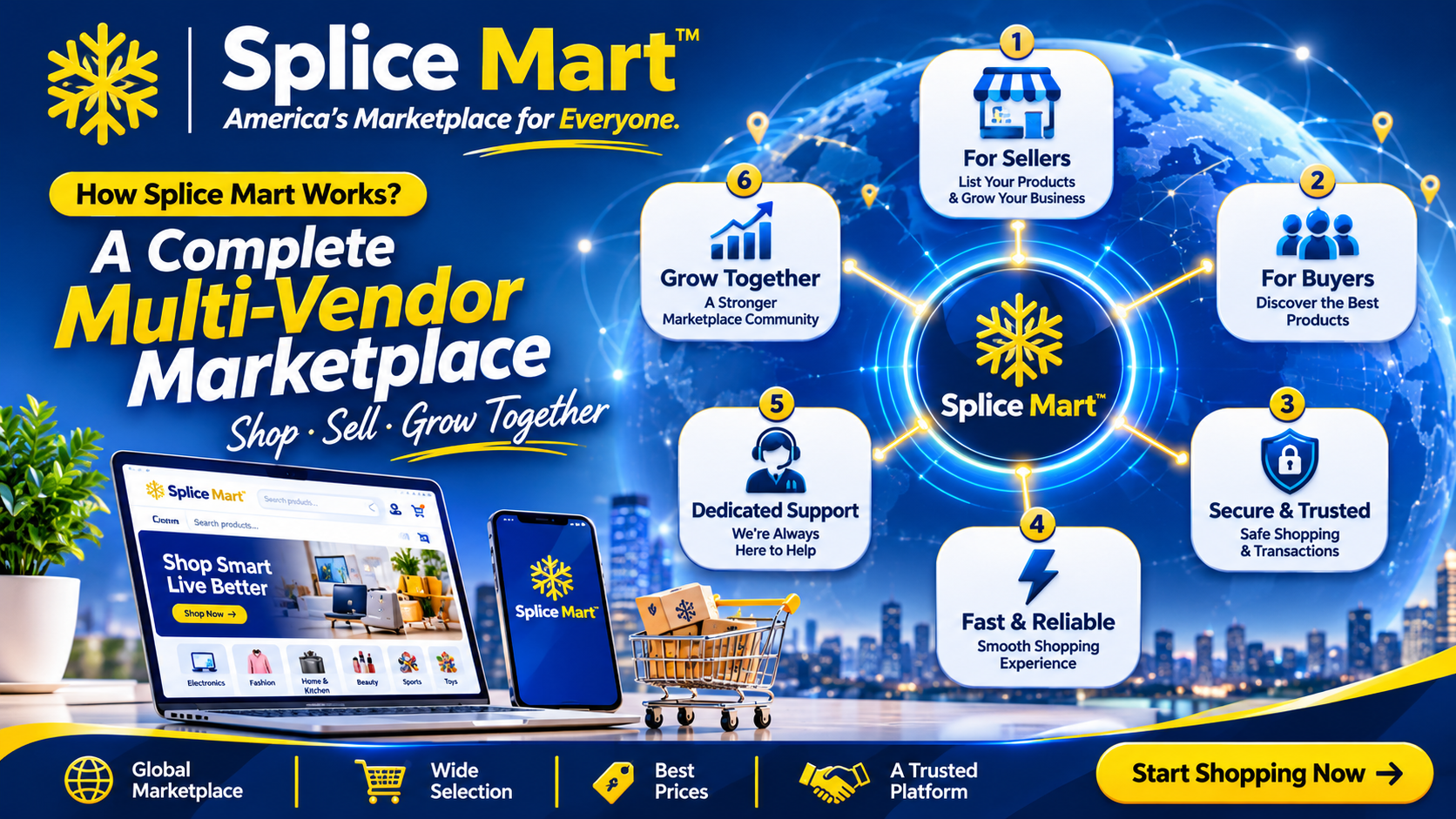
A multi-vendor marketplace connects three important participants: the marketplace operator, sellers, and customers.
Each participant has a different role in the shopping process.
The Marketplace Operator
The operator manages the overall platform, establishes marketplace policies, and provides the digital environment where sellers and customers interact.
The Sellers
Sellers create product listings, provide product information, manage their inventory, and fulfill orders according to the marketplace’s operating arrangements.
The Customers
Customers browse available products, compare options, review product information, and make purchasing decisions.
A typical marketplace shopping journey looks like this:
-
A seller registers with the marketplace, subject to its requirements.
-
The seller adds products with descriptions, images, and prices.
-
Customers explore different categories and product listings.
-
Customers select products and place orders.
-
Orders are processed according to the platform’s payment and fulfillment arrangements.
-
Sellers fulfill their respective orders, while the marketplace provides the agreed platform support.
This connected process makes it possible for different businesses to participate in one digital shopping environment.
3. How Is a Multi-Vendor Marketplace Different from a Traditional Online Store?
Both traditional online stores and multi-vendor marketplaces operate through digital platforms, but their business structures are different.
A traditional online store generally sells products managed by one business, whereas a multi-vendor marketplace allows multiple independent sellers to participate.
Here is a simple comparison:
| Feature |
Traditional Online Store |
Multi-Vendor Marketplace |
| Sellers |
Usually one business |
Multiple sellers |
| Product Sources |
Mainly one business’s inventory |
Different participating sellers |
| Product Variety |
Based on one store’s selection |
Can include different sellers’ selections |
| Seller Participation |
Store-owned |
Independent vendor participation |
| Management |
Primarily one retailer |
Marketplace operator and individual sellers |
| Shopping Choices |
Store’s available products |
Products from multiple vendors |
This difference makes multi-vendor marketplaces particularly interesting for businesses looking to create broader online shopping environments.
4. More Product Choices for Customers
One of the most noticeable advantages of a multi-vendor marketplace is the opportunity to explore products from different sellers.
Customers have different preferences, budgets, and shopping requirements.
Some shoppers prioritize affordability, while others focus on product features, brands, or specific designs.
When multiple sellers participate in one marketplace, customers may discover:
-
Different brands and product collections.
-
Alternative products for similar needs.
-
Various price options.
-
Unique products from independent sellers.
-
Products across multiple shopping categories.
For example, someone searching for kitchen accessories may discover products from several participating sellers and compare their available options.
This makes product discovery more flexible and can help customers make informed purchasing decisions.
5. New Opportunities for Individual Sellers and Small Businesses
Starting an online business can involve several challenges, including website development, product presentation, marketing, and customer acquisition.
A multi-vendor marketplace can provide sellers with an additional route into digital commerce.
Instead of building an entire standalone shopping platform from the beginning, sellers may be able to use an existing marketplace infrastructure, depending on its registration requirements and available services.
Potential benefits include:
Access to an Online Shopping Environment: Sellers can introduce their products through an established marketplace platform.
Product Visibility Opportunities: Listings can be discovered by shoppers exploring different categories.
Business Development: Sellers can experiment with product collections and understand customer interest.
Reduced Platform-Building Responsibilities: The marketplace may provide certain technical features that individual sellers would otherwise need to arrange independently.
For entrepreneurs and small businesses, these opportunities can make exploring online selling more accessible.
6. Why Professional Businesses Also Benefit
Multi-vendor marketplaces are not limited to individuals or small businesses.
Professional retailers and established companies can also explore marketplace participation as an additional digital sales channel.
A business may already operate a physical store or its own website but still find value in presenting products through another online platform.
Potential opportunities include:
-
Introducing additional product collections.
-
Reaching shoppers exploring different categories.
-
Exploring new digital sales channels.
-
Increasing opportunities for product discovery.
-
Diversifying online business activities.
The marketplace model allows different types of sellers to participate in the same commercial environment while maintaining their individual business identities.
7. The Importance of Trust and Transparency
A multi-vendor marketplace brings different sellers together, which makes trust and transparency especially important.
Customers should be able to understand who is selling a product, what the product includes, and what conditions apply to their purchase.
A responsible marketplace should encourage:
Accurate Product Listings: Descriptions, images, specifications, and product information should represent the actual item.
Transparent Pricing: Customers should understand product prices and any additional charges.
Clear Seller Information: Relevant seller details should be accessible.
Reliable Order Processes: Customers should understand how their orders are processed and fulfilled.
Clear Return and Refund Policies: Applicable conditions should be communicated before purchasing.
Customer Support: Assistance should be available for questions and order-related concerns.
Building trust requires cooperation between marketplace operators and participating sellers.
8. The Role of Technology in Multi-Vendor Marketplaces
Technology is the foundation of modern multi-vendor marketplaces.
Behind a convenient shopping experience are different digital systems that help manage products, sellers, orders, and customer interactions.
Some important features include:
Vendor Dashboards: Allow sellers to manage their product listings and business activities.
Product Management Systems: Help organize product information, categories, and inventory.
Search and Filtering: Help customers discover products according to their requirements.
Order Management: Supports order processing and coordination between relevant participants.
Payment Integration: Facilitates transactions through supported payment methods.
Mobile-Friendly Design: Allows customers to explore products using smartphones, tablets, and computers.
Analytics and Reporting: Can help sellers and marketplace operators understand product performance and shopping activity.
When these systems work together effectively, they can create a more organized and convenient marketplace experience.
9. Challenges Every Multi-Vendor Marketplace Must Consider
Although the multi-vendor model offers many opportunities, operating a successful marketplace also involves responsibilities.
Marketplace operators must consider several important challenges.
Maintaining Product Quality: Different sellers may offer products with varying quality standards.
Managing Seller Participation: Registration, verification, and marketplace policies need clear processes.
Handling Customer Complaints: Problems involving products, deliveries, or refunds require appropriate support arrangements.
Maintaining Accurate Information: Product listings should remain updated and understandable.
Managing Competition: Multiple sellers may offer similar products, making transparent pricing and accurate descriptions important.
Protecting Customer Information: Appropriate security and privacy practices are essential.
Addressing these challenges helps create a more dependable environment for customers and sellers.
10. What Makes Splice Mart Part of This Marketplace Vision?
Splice Mart – America’s Marketplace for Everyone is built around the concept of bringing customers, individual sellers, and professional businesses together through an online marketplace.
Our vision is to create a shopping destination where different product categories and sellers can be explored through one convenient digital environment.
We believe a marketplace should provide opportunities for both buyers and sellers.
Our marketplace vision focuses on:
-
For Customers: More opportunities to discover products and compare available choices.
-
For Individual Sellers: An opportunity to introduce their products to online shoppers.
-
For Small Businesses: Another potential channel for developing an online presence.
-
For Professional Sellers: An environment to showcase different product collections.
-
For Everyone: A convenient and inclusive approach to online shopping and selling.
We aim to make Splice Mart a place where product discovery, shopping convenience, and seller opportunities come together.
11. The Future of Multi-Vendor Marketplaces
The future of e-commerce will continue to create opportunities for digital marketplaces.
As customers become more comfortable with online shopping, their expectations around product discovery, convenience, transparency, and service will also continue to develop.
Multi-vendor marketplaces have the potential to respond to these expectations by bringing different sellers and product collections together.
Future developments may include smarter product recommendations, improved seller management tools, personalized shopping experiences, and more efficient order coordination.
However, technology alone will not determine marketplace success.
Trust, customer satisfaction, responsible seller participation, and continuous improvement will remain essential.
The marketplaces that understand the needs of both buyers and sellers will be better positioned to create meaningful digital shopping experiences.
Final Thoughts: One Platform, Multiple Sellers, Endless Possibilities
A multi-vendor marketplace represents a different approach to online commerce.
It creates a shared environment where customers can explore different products, individuals can introduce their businesses, and professional sellers can discover additional opportunities.
By bringing these participants together, the marketplace model can support a more connected and diverse digital shopping experience.
At Splice Mart, we believe that everyone deserves the opportunity to explore online shopping and selling.
Whether you are looking for your next purchase or exploring possibilities as a seller, our marketplace vision is centered on bringing people, products, and opportunities together.
Splice Mart – America’s Marketplace for Everyone.
One Platform. Multiple Sellers. More Opportunities.